
The Role of Biofertilizers in Sustainable Agriculture
The global food system is under unprecedented pressure. By 2050, the world will need to feed nearly 10 billion people — and conventional agricultural practices that rely heavily on synthetic fertilizers are proving unsustainable. Soil degradation, water pollution, and greenhouse gas emissions from chemical-intensive farming threaten the very foundation of food security.
What Are Biofertilizers?
Biofertilizers are substances containing living organisms or organic matter that enhance soil fertility and plant growth through natural biological processes. Unlike chemical fertilizers that deliver synthetic nutrients directly, biofertilizers work with the soil's ecosystem — introducing beneficial microbes, improving organic matter content, and activating nutrient cycles that sustain long-term productivity.
The Environmental Case
Chemical fertilizer production is energy-intensive, responsible for approximately 1.2% of global greenhouse gas emissions. Their application leads to nitrous oxide release (a greenhouse gas 300 times more potent than CO₂), nitrogen runoff that creates aquatic dead zones, and soil acidification that reduces long-term fertility. Biofertilizers eliminate these environmental costs while delivering comparable or superior results for soil health.
The Nigerian Context
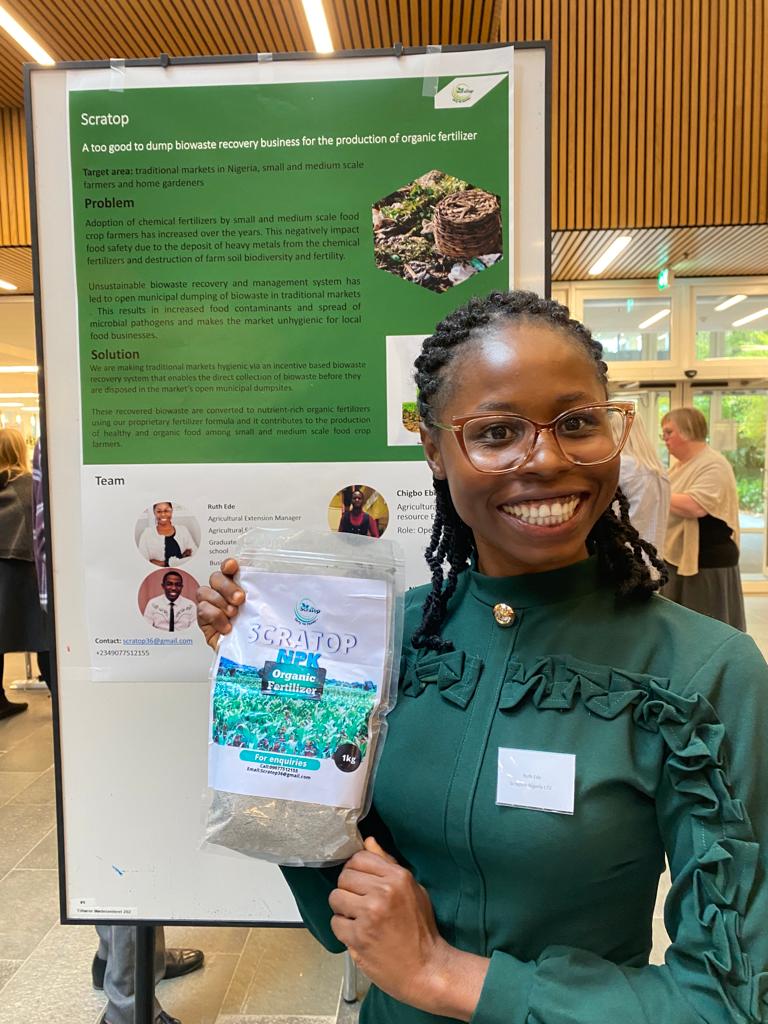
For Nigeria — where 75% of the farming workforce consists of smallholder farmers — biofertilizers represent both an environmental and economic opportunity. Many Nigerian soils have been severely degraded by decades of chemical use and deforestation. Smallholder farmers, trapped in cycles of rising input costs and declining yields, need solutions that are affordable, accessible, and regenerative. This is precisely the gap that Scratop's biofertilizer was designed to fill.
From Bio-Waste to Bio-Value
What makes Scratop's approach unique is the integration of waste recovery with fertilizer production. Every bag of Scratop biofertilizer starts as bio-waste — food scraps, fruit peels, farm residues — that would otherwise end up in landfills. By converting this waste stream into agricultural inputs, Scratop closes the loop between urban waste generation and rural food production, creating value at every stage of the cycle.
The future of agriculture isn't about choosing between productivity and sustainability — it's about systems that deliver both. Biofertilizers, and the circular economy models that produce them, are key to that future.